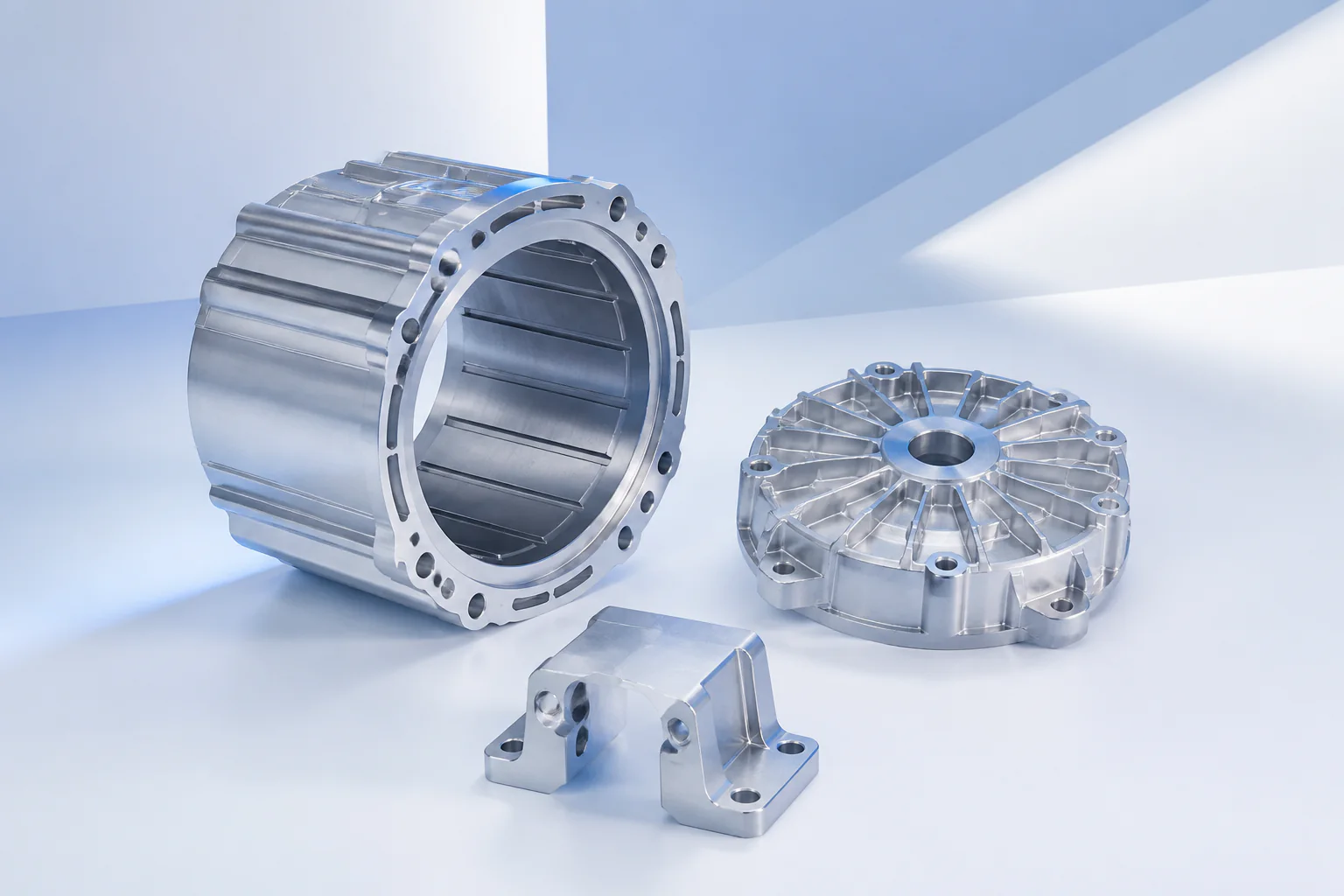
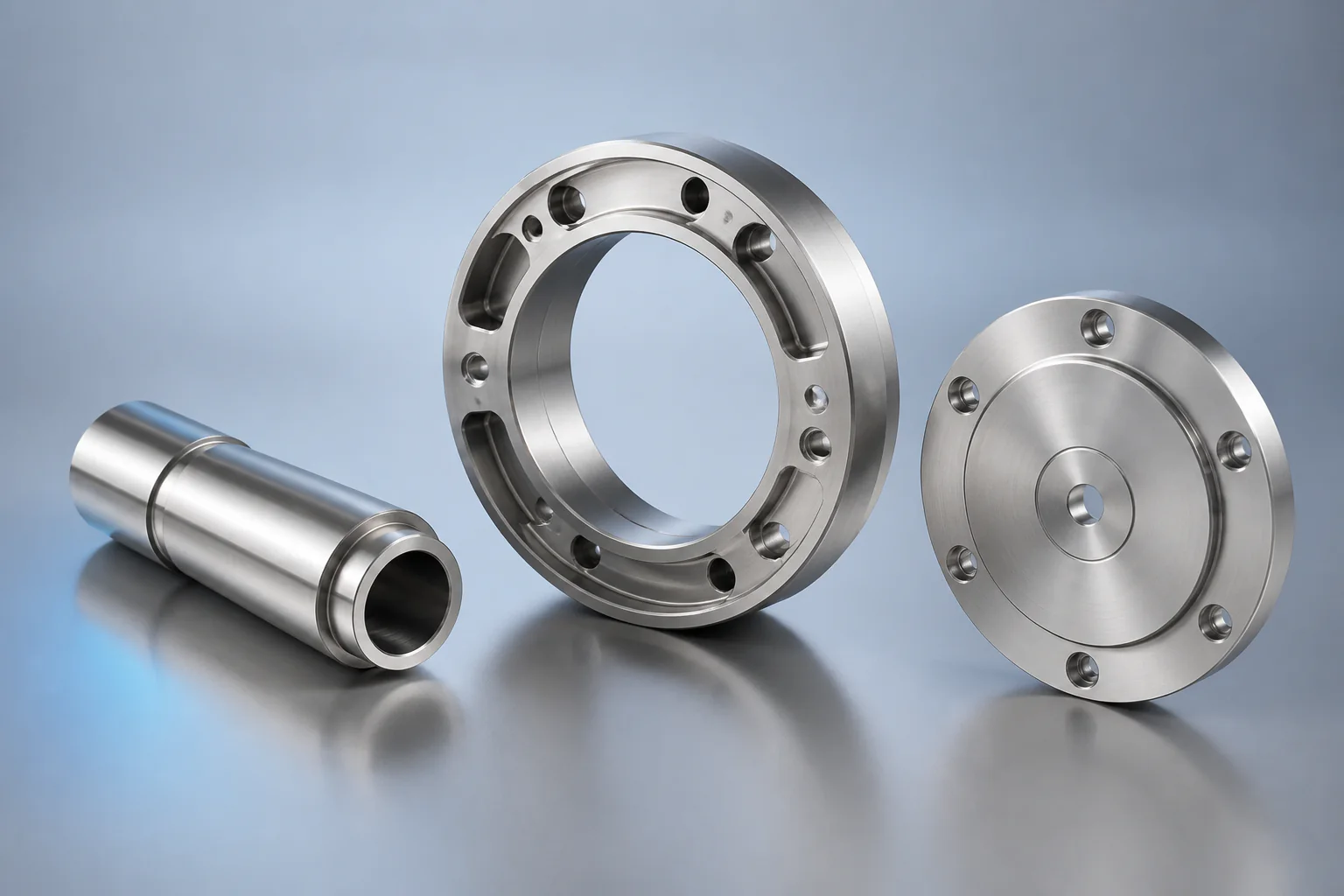
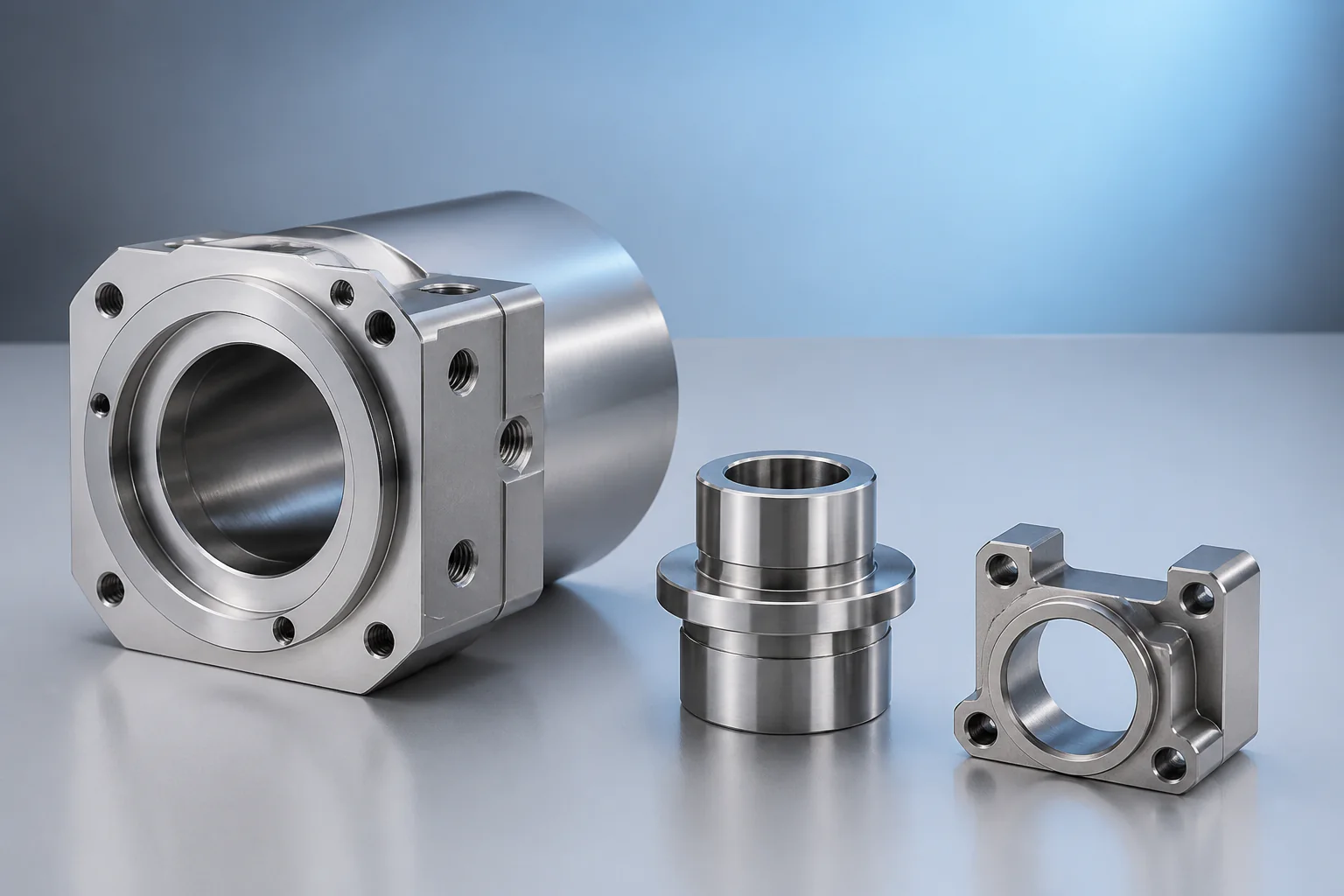
Potential application fit
- The design needs a higher strength-to-weight ratio
- A rigid robot, drone or reducer interface is weight-sensitive
- The buyer has already validated the alloy for the service environment
A higher-strength aluminum option for weight-sensitive robot, drone, reducer and motion-system interfaces when the released design requires more mechanical performance than a general-purpose alloy.
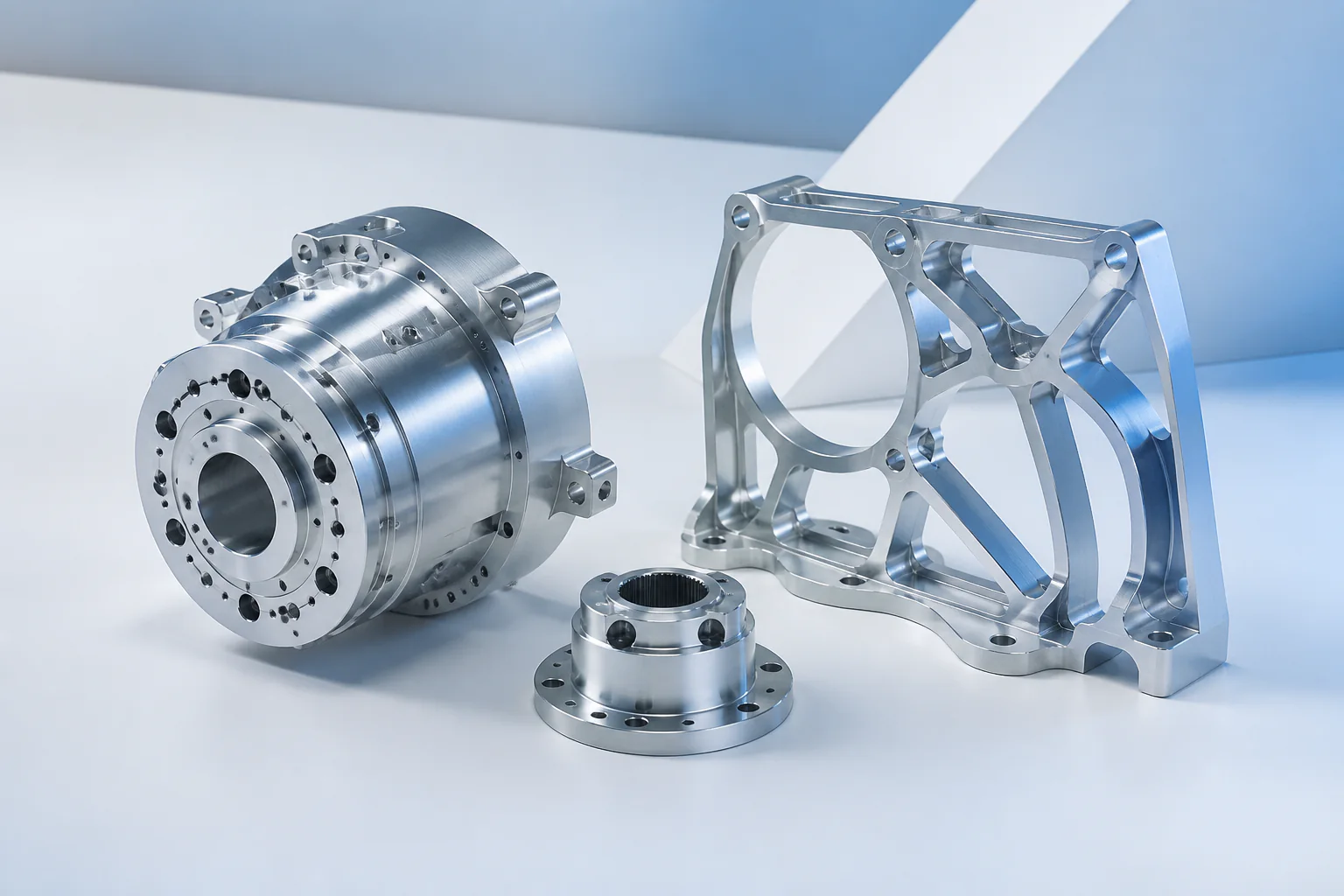
WEKO reviews Aluminum 7075 for lightweight high-load structural components such as reducer interfaces, motor supports, hubs and rigid brackets. Temper, stress state, corrosion strategy, finish and inspection requirements must be stated on the controlled drawing.
Corrosion behavior, notch sensitivity, finish and service environment remain part of material selection.
Sharp transitions, deep pockets and thin walls should be reviewed against workholding and residual-stress risk.
Temper, raw-material source and certificate expectations should be defined before quotation.
Geometry, quantity, quality scope and material availability determine the final route.
State certificate, traceability, inspection and finish-report expectations during RFQ. Availability and scope are confirmed per project.
Use WEKO’s industry guides to review load, interface, environment and inspection considerations.
No. It offers different strength, corrosion, finishing and cost tradeoffs. Selection belongs to the customer’s engineering requirements.
A specified anodizing route can be reviewed, but alloy response, color expectations, masking and corrosion strategy must be agreed.
Yes, subject to drawing review, material availability, capacity, inspection scope and commercial agreement.