


Release a production-intent pilot
Before moving from ten prototypes to a larger batch, run the intended fixture, cutting tools and inspection sequence. Compare the first and last pieces around a normal tool change, since a carefully adjusted prototype can conceal drift. Confirm that packaging preserves critical faces through transport and that lot identity survives split deliveries. Record the approved process revision so the next reorder repeats the validated route.
Freeze the technical baseline
Before scaling, close open drawing questions and identify the revision that controls production. Record approved material, finish, critical characteristics and any deviations accepted during prototyping. A hand-fitted prototype should not become the silent standard. If assembly required adjustment, convert that learning into a drawing or controlled process requirement.
Replace prototype methods with a stable route
Prototype machining may use soft jaws, slow cuts and extensive operator attention. Production needs repeatable locating, tool access and loading. Review dedicated fixtures, standard tools, probing and error-proofing where volume justifies them. Validate the production route with a pilot lot before releasing the full quantity.
Control tool wear and variation
Long runs create drift that does not appear in five prototypes. Set tool-life limits, offset rules and in-process checks for the features most sensitive to wear. Track cavity, machine or fixture identity when several resources make the same part. Use actual values on critical features to see trends before parts cross the limit.
Change the inspection plan
Measuring every dimension on every part is rarely the best volume strategy. Use first-off approval, risk-based in-process sampling and final lot release. Maintain full checks on safety, sealing or critical-fit characteristics where required. The plan must state the reaction to drift, a failed sample or an unapproved process change.
Plan supply and change control
Volume orders need material forecasts, approved outside processors, packaging trials and backup capacity. Define how engineering changes are communicated and how old material is segregated. Requalification should be triggered by changes to the drawing, material, supplier, fixture or critical process. Price breaks should identify the assumptions that make them possible.
Scale-up checklist
- Released drawing and approved deviations
- Pilot lot using production tooling
- Fixture and tool-life plan
- Critical-characteristic sampling
- Material and outside-process capacity
- ECO and process-change notification
Illustrative example: moving a motor cover from 10 to 1,000 pieces
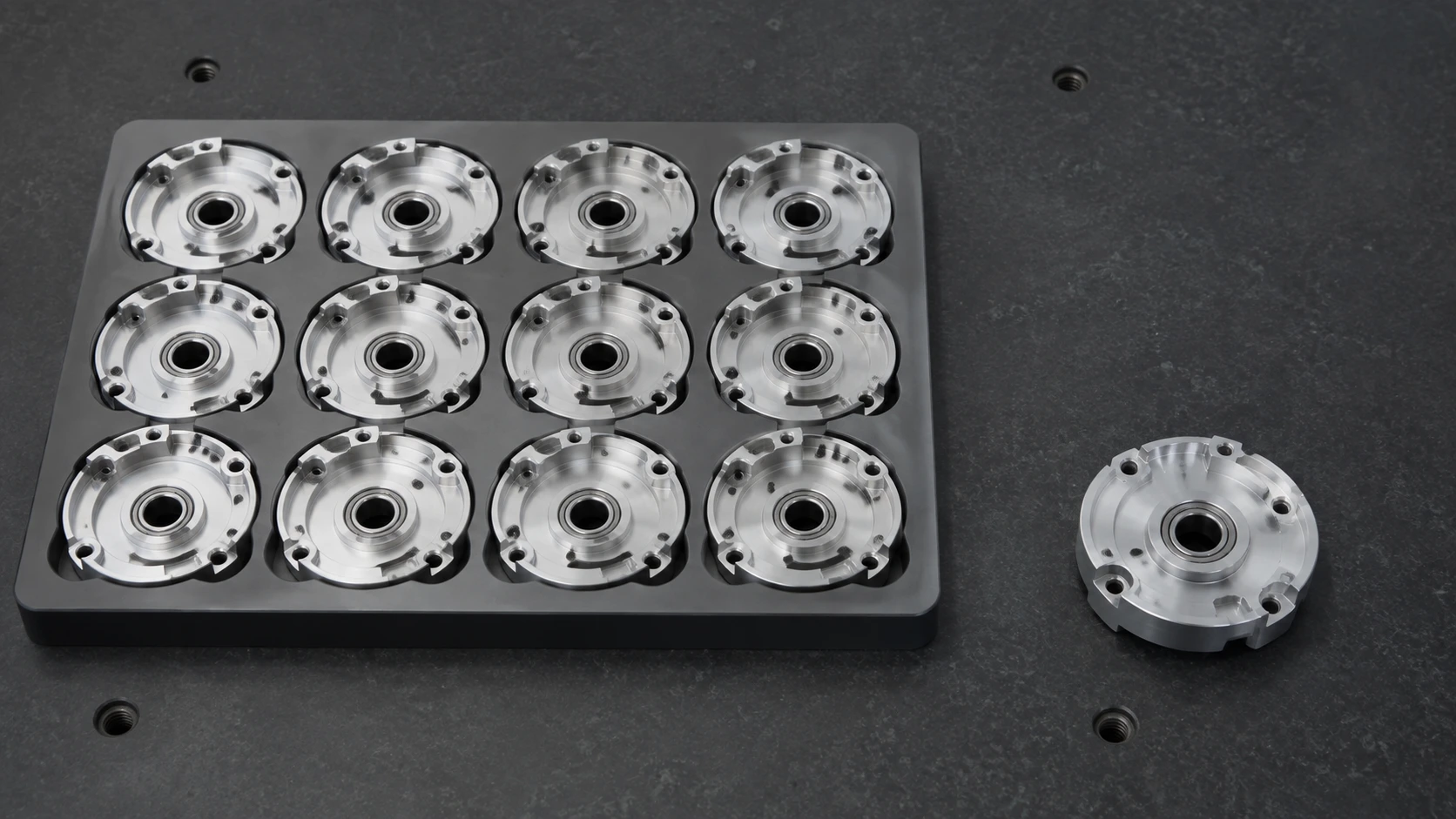
Ten prototypes were machined with soft jaws and complete dimensional inspection. At 1,000 pieces, that route created excessive loading time and no clear response to tool wear. The production plan added a dedicated fixture, a pilot run, tool-life limits and first-off approval after each setup. Critical bores were recorded at defined intervals, while stable nonfunctional dimensions moved to reduced sampling. The drawing and approved prototype remained the technical baseline, but the manufacturing controls changed substantially.
Commercial decisions before volume release
Separate one-time investment from recurring price. Fixtures, special gauges and validation can raise the first production invoice while lowering piece cost and risk over the program. Agree ownership, storage, maintenance and replacement responsibility for paid tooling. Confirm material purchasing quantities, finished-goods expectations and forecast flexibility. Define what happens when demand changes or a revision makes inventory obsolete. A useful volume quote states the assumptions behind the price break instead of presenting a number that only works under ideal utilization.
Buyer decision
Release volume only after a pilot lot proves the real fixture, tools, operators, outside processors and inspection plan. Compare the pilot with the approved design and record every deviation. Set change-notification and requalification triggers before recurring orders begin. The supplier should also show capacity for the requested rate, not just enough time for one batch. A controlled scale-up protects delivery and quality while allowing justified cost reduction.
Track yield, rework, delivery and critical-feature variation during the first production releases. Review those results jointly before reducing inspection or increasing batch size. Scaling should be an evidence-based sequence, not one jump from sample approval to unrestricted volume.