


Freeze the configuration being approved
A first-article report is useful only when the reader can identify the product and process it represents. Record the drawing revision, model revision, material, finish and relevant manufacturing route. Identify the inspected parts and their lot. If the sample uses temporary tooling or a substitute finish, state that limitation prominently so approval is not mistaken for evidence covering the final production process.
Balloon requirements without losing context
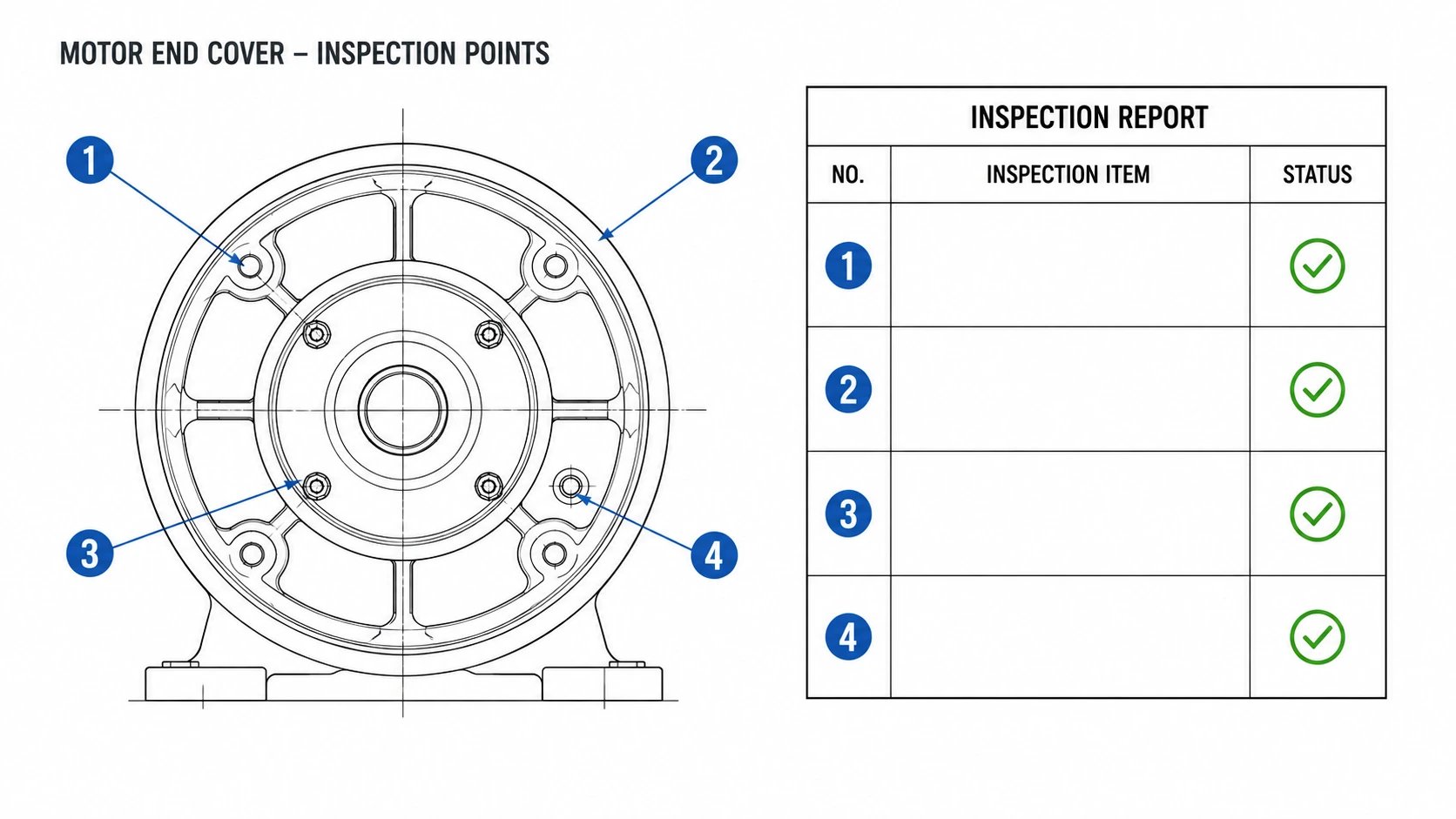
Assign a reference to each reportable drawing requirement, including notes that affect material, finishing and special processes. Retain the relationship to datum features and any shared callout. A table of isolated nominal values can conceal that relationship. Review the ballooned drawing against the report before measurement so omitted characteristics are found while the sample and appropriate inspection resources are still available.
Record actual results and methods
Report measured results in consistent units with the applicable limits and disposition. Use attribute results only where the requirement and method justify them. Identify the gauge or measurement program for features whose method materially affects the result. A size reading and a geometric tolerance evaluation answer different questions, so avoid using a diameter result as evidence that the bearing axis meets its positional requirement.
Inspect the final specified condition
An end cover can change through coating, cleaning, stress relief or assembly of inserts. Identify the condition in which each requirement must be verified. If an inaccessible characteristic is checked earlier, explain the control that protects it through later operations. Final inspection should include the features most likely to change, such as coated bearing seats, sealing tracks and threaded interfaces.
Close deviations before production release
List deviations separately from passing results and identify any approved concession with its scope and expiry. A first-article signature should not silently authorize an out-of-tolerance production run. Define which process or drawing changes trigger partial or complete reinspection. Keep the approved report with the control plan so recurring production checks can focus on the characteristics and operations demonstrated during the pilot.
Approval checklist and evidence
| Review item | Decision to make | Evidence to retain |
|---|---|---|
| Configuration | Identify product, material and process revisions. | Report header tied to the actual inspected samples. |
| Coverage | Match every required characteristic to a report entry. | Ballooned drawing and reconciled requirement list. |
| Measurement | Record results, units, methods and inspected condition. | Traceable gauge or program references where relevant. |
| Release | Resolve deviations and define reinspection triggers. | Authorized disposition and approved production baseline. |
Worked review example
Illustrative scenario: a report shows a bearing seat within tolerance before anodizing, while the final end cover is supplied coated. The number is valid for the earlier condition but cannot prove final fit. The review identifies the missing final-condition result and requests the appropriate check or an approved masking and control route. The report should preserve the original measurement and add the final evidence, rather than relabeling the earlier number as a post-finish result.
Information for the engineering review
- Drawing and manufacturing revisions
- Ballooned requirements and notes
- Part and lot identification
- Method, units and final-condition results
- Deviations and reinspection triggers
Discuss this requirement with WEKO using the controlled drawing, the relevant mating interfaces and the review information above. Identify the decision that needs confirmation and the acceptance evidence expected with the first parts.
Sources and further reading
Frequently asked questions
Does first-article approval guarantee every later part?
No. Ongoing controls must maintain the approved process and detect changes.
Can a report contain pass/fail entries?
Yes, for suitable attribute requirements. It should not replace useful numerical results for measured dimensions.