Coating & treatment
Specify the treatment requirements and the verification needed. Agree the documentation and sampling within the order scope.
WEKO / SURFACE FINISHING FOR MACHINED PARTS
Anodizing, passivation, surface preparation, deburring and cleaning.
Define the appearance. Protect the interfaces. Finish the complete part.
CHOOSE THE ROUTE / DEFINE THE RESULT
Review the treatment with the material and application. Each choice needs a clear specification for the surfaces that matter.
SUITABLE ALUMINIUM ALLOYS
Review clear or colour anodizing alongside the alloy, component function and final dimensions. Appearance and functional requirements belong in the same specification.
THE MATERIAL / THE TREATMENT
Review each material and surface process together. Include thickness, masking, adhesion and final acceptance where they affect your component.
| Material / grade | Component scope | Finish to discuss | Define before quotation |
|---|---|---|---|
| Aluminum6061 / 7075 | CNC-machined housings, plates and brackets | Blasting, anodizing and marking | Specify the temper, coating requirements, masked faces and final dimensions. |
| Stainless steel304 / 316 / 316L by sourcing review | Fittings, shafts, sleeves and machined bodies | Passivation and brushing | 316 and 316L are distinct grades. Request material evidence; grade alone does not certify food-contact suitability. |
| Brass & copperH59 brass / T2 copper | Turned bodies, connectors and specified interfaces | Mirror polishing for suitable copper parts | Give the exact grade and stock form. Agree cosmetic faces and sample acceptance. |
| Carbon steel45# / Q235 | Drawing-defined mechanical and structural parts | Nickel plating and blackening | Specify the grade, condition, any heat treatment and corrosion-protection requirements. |
| Engineering plasticsABS / POM / PMMA / PA6 | Drawing-led polymer components | Paint or UV treatment by review | Confirm application, colour and dimensional needs. Coating adhesion needs review, particularly for POM. |
PC, PA66, special alloys and additional treatments need a separate material and process review. Metal 3D printing, vacuum casting and specialist military-specification finishes are reviewed individually.
Specify the required system, thickness, colour, masking and final acceptance. Powder coating is reviewed separately; it is not a substitute finish description for anodizing.
SURFACE / MASKING / FINAL CONDITION
Mark the treatment zones and protected features. Connect coating requirements, assembly interfaces and inspection in one drawing.
ILLUSTRATIVE PROCESS STUDY / YOUR DRAWING DEFINES THE REQUIREMENTS
Identify the treatment specification, coating requirements and cosmetic faces. Connect appearance references and functional requirements to the actual part geometry.
Review the treatment zonesDefine masked areas, fit surfaces, threads and contact restrictions on the drawing. Agree boundaries and process access alongside the treatment sequence.
Review masking and interfacesState which dimensions apply after treatment and what surface, coating or appearance checks are required. Confirm the method, sampling and documentation within the quote.
Plan the finished-part checksA CLEAR CALLOUT PREVENTS A VAGUE QUOTE
Send the finish specification with the part drawing. Separate what must perform from what must look right.
Review my finish specificationState the exact alloy or grade, incoming condition and any earlier heat treatment or surface process.
Include the requested process, standard and revision, coating requirements and any defined verification.
Mark fits, threads, sealing faces, contact areas and datums that need protection or special acceptance.
Identify visible faces, texture, colour reference, acceptable contact marks and the agreed sample or viewing criteria.
State which dimensions apply after treatment and which reports, checks, cleaning and packing belong in the scope.
FUNCTION FIRST / APPEARANCE WITH CONTEXT
A finish can serve different purposes. Confirm the process, material and acceptance together instead of relying on a visual sample alone.
| Route | Material starting point | Define in the RFQ | Keep separate |
|---|---|---|---|
| Anodizing | Suitable aluminium alloy and condition | Process/coating requirements, colour range, masks and final dimensions | Alloy choice, cosmetic zones and dimensional acceptance |
| Passivation | Specified stainless steel | Requested treatment standard, incoming surface and verification | Roughness, polishing and appearance requirements |
| Blasting & preparation | Material and subsequent process by review | Preparation, texture reference, protected features and next treatment | Functional surface roughness and cosmetic acceptance |
| Deburring & cleaning | Material, geometry and delivered condition | Edge requirements, internal access, cleanliness and packing | Sharp functional edges and delicate features |
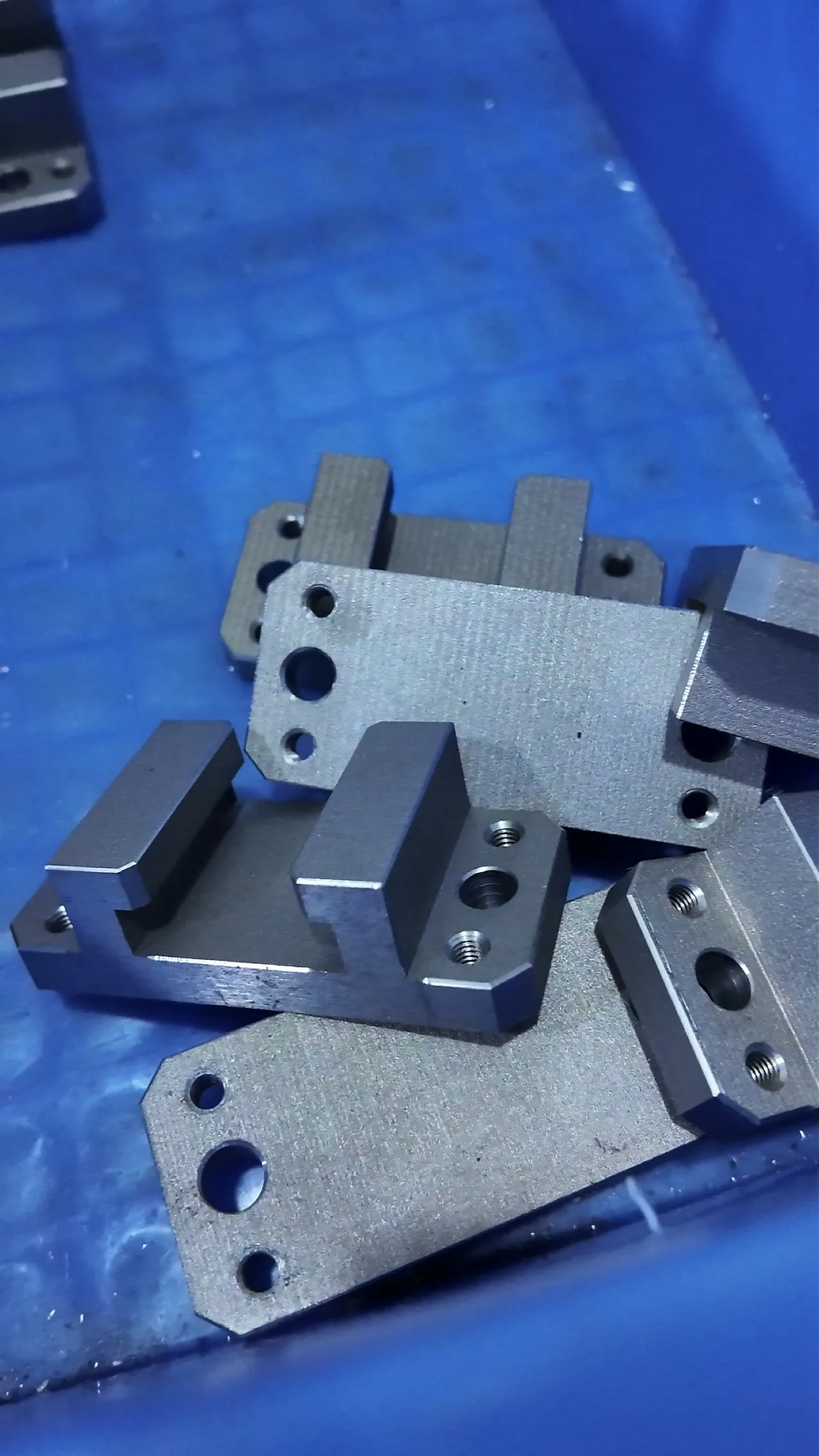
VISUAL EXPECTATIONS / AGREED BEFORE PRODUCTION
Turn the reference into clear acceptance criteria. Surface preparation, material response, geometry and the agreed process all belong in the review.
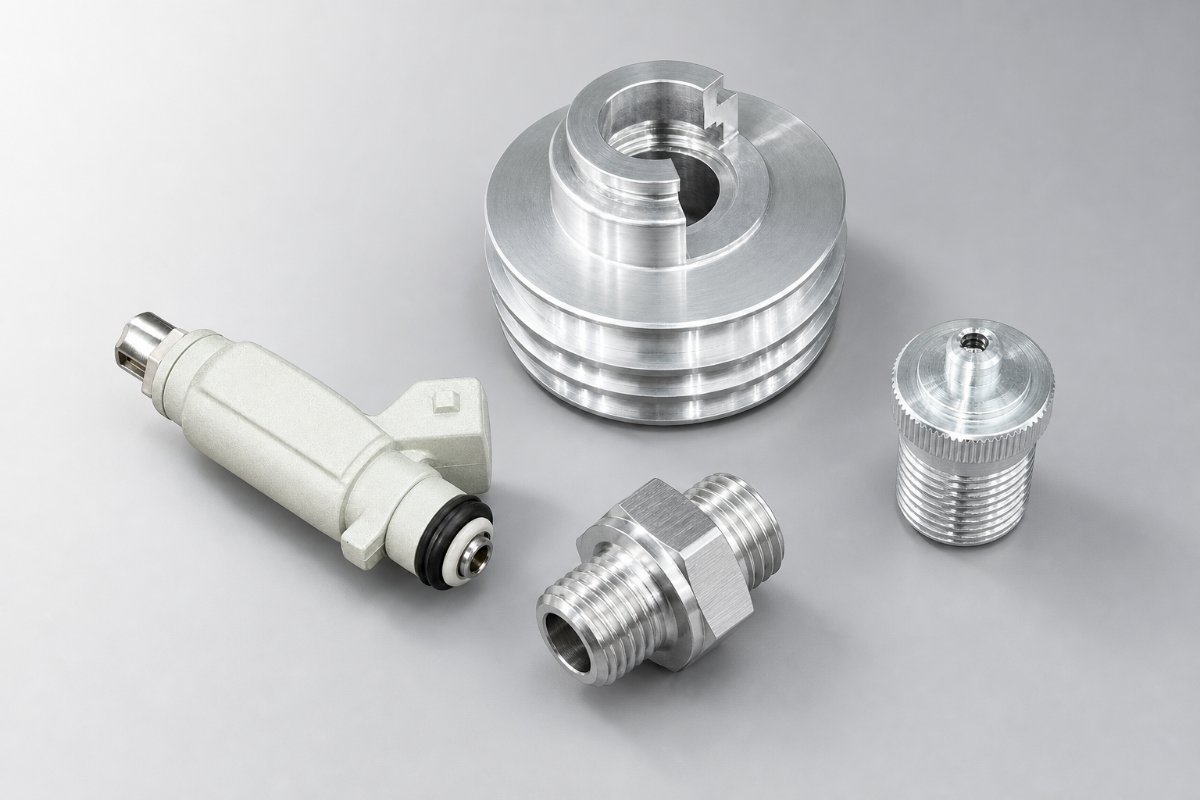
The photo shows component examples. Specify the actual treatment and appearance for your own part.
Discuss a surface referenceTHE FINISHED CONDITION / THE AGREED EVIDENCE
Make the acceptance plan part of the quotation, with the checks and documentation your component requires.
Specify the treatment requirements and the verification needed. Agree the documentation and sampling within the order scope.
Check the critical features in their stated acceptance condition. Include the masked zones and mating surfaces that decide fit.
Define cosmetic criteria, handling, cleanliness and packing. Confirm how finished surfaces are protected for shipment.
KEEP MACHINING AND FINISHING CONNECTED
Include finishing early so the manufacturing discussion covers the part after treatment, not only its machined geometry.
THE MANUFACTURING BEHIND THE PART
Explore the factory, review the supplier documents and agree the production and finishing scope for your component.
Open each certificate for its holder, scope and validity.
Certificate holder: Dongguan XuXiang Precision Hardware Co., Ltd., within the WEKO manufacturing group. Review each document for its certified entity, scope and validity.
YOUR FINISHED COMPONENT / YOUR NEXT STEP
Start with the drawing or description, material, quantity and finish. Add a reference image if it helps explain the result.
Request a Finishing QuoteAgree an NDA before sensitive filesSURFACE FINISHING / USEFUL ANSWERS
Yes. Include the finish in the RFQ so material, machining, treatment, inspection and packing can be reviewed as one component scope. The quotation confirms the agreed manufacturing route and documentation.
Include the alloy and condition, requested process specification and revision, coating requirements, colour range, cosmetic zones and any reference sample. Mark masking, contact restrictions and the condition in which critical dimensions are accepted.
No. Treat passivation, surface roughness and cosmetic appearance as separate requirements. Specify the stainless grade, requested passivation standard and verification needs, and identify any additional surface preparation.
Use the illustrations to discuss the surface and functional details. Approve the actual finish using the specification, agreed sample or defined appearance criteria for the selected material and process.
Identify features that must not receive a treatment: for example a specified fit, sealing interface, electrical contact, thread or datum. Mark the boundary, permissible contact areas and any treatment sequence on the drawing.
State the required acceptance condition for each critical feature. Treatment, coating thickness and the manufacturing sequence are reviewed against the drawing so the finished component meets the agreed requirements.
Yes. Share a reference sample or controlled colour designation, surface preparation and the faces visible in service. Agree the acceptable range, viewing criteria, contact-mark locations and batch expectations before production.
Yes, by project review. State quantity and the finish needed now. Setup, treatment batch arrangements, masking, inspection and handling can influence the price and schedule.
Send the exact material, process standard and finished-part requirements. Additional treatments are reviewed for feasibility and commercial scope before they are included in the quotation.
Yes. Agree the NDA and confidentiality requirements before exchanging sensitive drawings, models or project documents. A general description is enough to start the discussion.